
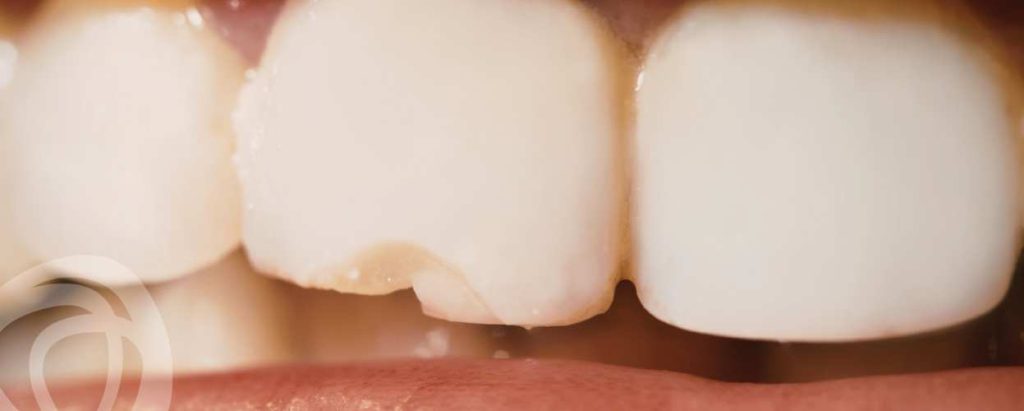

Chipped Tooth: What It Means & How Your Dentist Can Help
What Is a Chipped Tooth?
A chipped tooth occurs when a small portion of the tooth’s enamel breaks away. Enamel is the hard outer layer that protects the inner structures of your tooth. When this layer is damaged, the tooth may appear uneven, feel rough, or become sensitive.
Depending on the severity of the chip, the damage may involve only the enamel or extend deeper into the dentine or pulp of the tooth. In some cases, a chip may be part of a larger crack or fracture that requires prompt attention.
Please visit our Dental Emergencies in Brisbane page for more information on urgent dental care.
Common Causes of a Chipped Tooth
There are many reasons a tooth may chip. Some occur suddenly, while others develop gradually over time.
1. Biting on Hard Foods or Objects
Hard foods such as ice, nuts or crackling can place significant pressure on teeth. Teeth that are already weakened by fillings or wear may be more susceptible to chipping when biting down on something hard.
2. Accidental Trauma
Sports injuries, falls, or accidental knocks can easily chip or fracture a tooth. This is particularly common in children and during active play.
3. Teeth Grinding (Bruxism)
Grinding or clenching your teeth — often during sleep — places repeated pressure on the biting surfaces of your teeth. Over time this can cause gradual wear and chipping along the edges of the teeth. Learn more on Teeth Gringing / Bruxism.
4. Worn or Weakened Teeth
Teeth that have been heavily restored with fillings, or those affected by enamel wear, may be more prone to chipping. Natural ageing, acidic diets, and grinding can all contribute to this weakening.
Symptoms That May Accompany a Chipped Tooth
Not all chipped teeth cause pain, but some people may experience:
A rough or sharp edge on the tooth
Sensitivity to hot, cold, or sweet foods
Discomfort when biting or chewing
Visible damage or an uneven tooth surface
If the chip exposes deeper layers of the tooth, sensitivity or pain may occur more easily.
Why It’s Important to Have a Chipped Tooth Checked
Even a small chip can create areas where bacteria accumulate more easily, increasing the risk of decay or further fracture. In some cases, what appears to be a small chip may actually be part of a larger crack in the tooth.
Dental emergencies should be assessed as soon as possible, as delaying treatment can make the problem more complex and uncomfortable.
Your dentist can examine the tooth and determine the extent of the damage, ensuring the most appropriate treatment is recommended.
Treatment Options for a Chipped Tooth
Treatment depends on the size and location of the chip, as well as the overall health of the tooth.
Your dentist may recommend:
Composite restorations (also called fillings)
At Medland, we don’t just do fillings, we restore your tooth.
Fillings are used to replace natural tooth structure when it becomes fractured, chipped, cracked, broken or damaged by tooth decay or trauma.
Ceramic veneers
For front teeth or cosmetic concerns, veneers can improve the shape, colour and symmetry of the smile while restoring chipped or worn teeth.
Dental crowns
For larger fractures or weakened teeth, a crown may be used to protect and strengthen the tooth.
Your dentist will discuss the most suitable treatment options based on your individual needs.
Medland’s Dentists are highly trained, skilled clinicians who prioritise the health and well-being of our patients and stay at the forefront of Brisbane’s dental industry. We take pride in providing technical excellence and exceptional care

How to Prevent Chipped Teeth
While not every accident can be prevented, there are steps you can take to reduce the risk of tooth damage:
- Avoid biting down hard on hard foods or objects such as ice
- Wear a mouthguard during sports
- Seek treatment if you grind or clench your teeth
- Attend regular dental check-ups to identify early signs of wear or weakness
Preventative care plays an important role in protecting the strength and longevity of your teeth.
When to See Your Dentist
If you notice a chipped tooth — even if it doesn’t hurt — it’s best to have it assessed by your dentist. Early treatment can prevent further damage and restore both function and appearance.
If you experience pain, sensitivity, or a larger fracture, prompt dental care is recommended.
At Medland, our experienced team is here to help you maintain a healthy, confident smile and ensure any concerns are addressed with care and expertise.